






What Is Mas? Playing Mas in Caribbean Carnival Explained
Mas — short for masquerade — is the beating heart of carnival. Here's what it means to 'play mas,' and how mas bands bring the road to life.
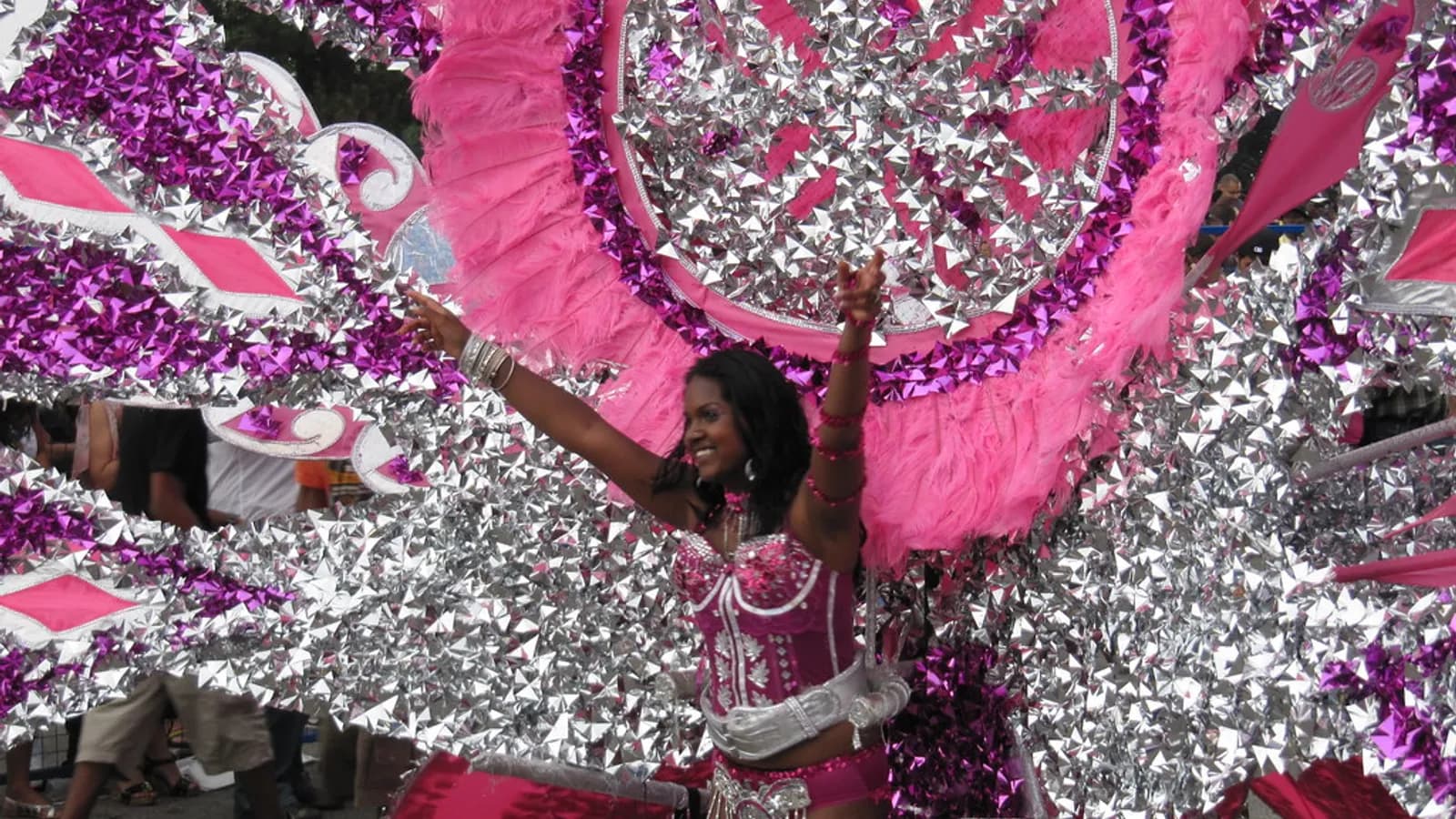
Mas — short for masquerade — is the costumed heart of Caribbean carnival. When people say they are "playing mas," they mean taking to the road as a costumed masquerader in a carnival band. This guide explains what mas is, where it came from, and how it works today.
What does "playing mas" mean?
Playing mas means joining a mas band and parading through the streets in that band's costume, moving to soca and steelpan as part of a themed presentation. It is participation, not spectating — the masquerader becomes part of the art.
Where does mas come from?
Mas grew out of the carnival traditions of Trinidad and Tobago, shaped by the meeting of African and European cultures. After Emancipation from slavery, freed people transformed carnival into a powerful expression of identity, satire, and freedom — using costume and character to tell stories, mock the powerful, and celebrate survival. Those roots still run through every costume today. (See our guide on Emancipation and carnival.)
How do mas bands work?
A mas band designs a yearly theme and divides it into sections, each with its own costume. Masqueraders register with a band, choose a section, and receive their costume for the parade. The band's two showpiece costumes — the King and Queen — compete separately in the Kings & Queen competition.
Types of mas
- Pretty mas — the bright, feathered, bejewelled costumes most associated with modern carnival.
- Traditional mas — historic characters like the Midnight Robber, Jab Molassie (devil mas), Moko Jumbie (stiltwalker), and Dame Lorraine, each with its own story.
Mas in Toronto
At the Toronto Caribbean Carnival (Caribana), mas bands are the centrepiece of the Grand Parade. Many of them are part of our Carnival Mas Bands directory. S.O.C.A. teaches the craft of mas-making to the next generation through our workshops and events.
Photo: Loozrboy, CC BY-SA 2.0, via Flickr (resized).
Frequently asked questions
What does 'playing mas' mean?+
Playing mas means participating in carnival as a costumed masquerader within a mas band, parading through the streets in the band's themed costume.
What is a mas band?+
A mas band is a group that designs a yearly carnival theme, divides it into costume sections, and presents them on the road. Masqueraders register to play with a band and receive their costume.
What is the difference between pretty mas and traditional mas?+
Pretty mas refers to the bright, feathered, bejewelled costumes of modern carnival. Traditional mas refers to historic characters like the Midnight Robber, Moko Jumbie, and Jab Molassie, each carrying its own folklore.
Where did mas come from?+
Mas grew from the carnival traditions of Trinidad and Tobago and became a powerful expression of freedom and identity for African-descended people after Emancipation from slavery.
Experience it for yourself
S.O.C.A. keeps Caribbean carnival culture alive year-round through events, workshops, and our artist community.