












Kings & Queen of the Bands: Carnival's Costume Competition, Explained
The King & Queen of the Bands is carnival's most spectacular costume competition. Here's what it is, how the giant costumes are built and judged, and where it fits in the Toronto Caribbean Carnival.
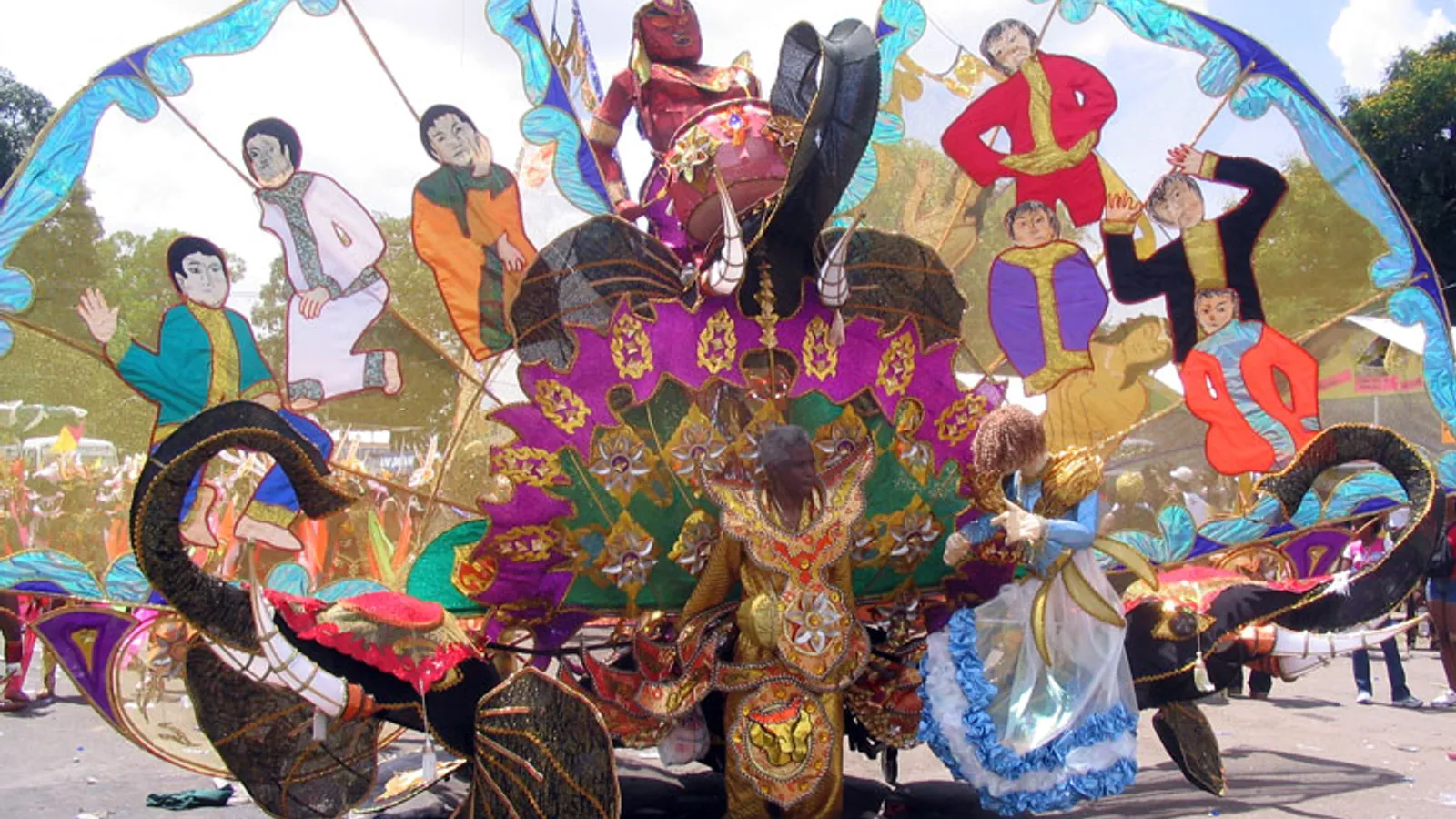
Of all the spectacles at Caribbean carnival, none is bigger — literally — than the King & Queen of the Bands. This guide explains what the competition is, how the enormous costumes are made and judged, and why it sits at the artistic heart of carnival.
What is the Kings & Queen competition?
Each mas band builds two showpiece costumes that represent the whole band: a King and a Queen. These are not ordinary costumes — they are wearable sculptures, often several metres tall and wide, worn by a single performer who must dance and present them on stage. At the Toronto Caribbean Carnival this happens at the King & Queen Showcase, held in the days before the Grand Parade, where bands compete for the titles of King of the Bands and Queen of the Bands.
What do the costumes look like?
A King or Queen costume is an individual portrayal — a single, giant costume built around one theme, as opposed to the matching sections worn by the rest of the band. They can tower over the performer, span several metres, and are frequently mounted on hidden wheels or supports so the masquerader can move them. Themes draw on history, nature, folklore, Caribbean identity, and social commentary.
How are they built?
Building a King or Queen is months of skilled work by a costume designer (often called a mas man or mas woman) and their team. The craft typically involves:
- Wire-bending — shaping steel wire into the costume's frame and silhouette.
- Structure and balance — engineering the piece so one person can carry or wheel it.
- Decoration — feathers, beads, sequins, fabric, moulded shapes, and paint that bring the theme to life.
- Mobility — wheels, harnesses, and supports so the costume can be danced and spun on stage.
These are exactly the skills S.O.C.A. teaches in our mas-making workshops and youth camps — wire-bending and costume construction are endangered crafts, and passing them on keeps the art form alive.
How are they judged?
Judging rewards artistry and performance, not just size. Judges generally weigh:
- Portrayal of the theme — how clearly and creatively the costume tells its story.
- Craftsmanship and construction — the quality, detail, and originality of the build.
- Presentation and performance — how the masquerader animates the costume on stage.
- Mobility — whether the performer can genuinely carry and control the piece.
King of the Bands vs Queen of the Bands
The King is the male individual portrayal and the Queen is the female individual portrayal for each band. Winning either title is a major honour for a band and its designer, and celebrated designers become legends in the carnival community.
Where it fits in the festival
The King & Queen Showcase is one of several signature events of the Toronto Caribbean Carnival, alongside the Grand Parade, steelpan competitions, and Junior Carnival. For the full picture, read our guides on the Toronto Caribbean Carnival and Caribana.
See the artists behind it
The costume-makers who build these pieces lead the mas bands in our community. Explore their work, or come learn the craft through our events and workshops.
Hero photo: Jean-Marc / Jo BeLo, CC BY 2.0, via Wikimedia Commons (resized).
Frequently asked questions
What is the Kings and Queen competition at carnival?+
It is a competition where each mas band presents two giant showpiece costumes — a King and a Queen — worn by a single performer. Bands compete for the titles of King of the Bands and Queen of the Bands.
How big are King and Queen costumes?+
They are often several metres tall and wide — wearable sculptures far larger than a normal costume — and are frequently mounted on hidden wheels so one performer can move and dance with them.
How are King and Queen costumes judged?+
Judges weigh portrayal of the theme, craftsmanship and construction, stage presentation and performance, and mobility — how well the single masquerader can carry and control the costume.
What is the difference between King of the Bands and Queen of the Bands?+
The King is a band's individual male portrayal and the Queen is its individual female portrayal. Each band presents both, and titles are awarded for the best of each.
How are the costumes made?+
They take months of skilled work — wire-bending to form the frame, engineering for balance and mobility, and decoration with feathers, beads, sequins, and fabric. These crafts are what S.O.C.A. teaches in its mas-making programs.
When is the King & Queen Showcase at the Toronto Caribbean Carnival?+
It is typically held in the days leading up to the Grand Parade during carnival weekend. Check the official festival schedule each year for exact dates and venues.
Experience it for yourself
S.O.C.A. keeps Caribbean carnival culture alive year-round through events, workshops, and our artist community.