






Jab Molassie: The Devil Mas of Carnival
Covered in oil, mud, and molasses, the Jab Molassie is carnival at its rawest and most defiant. Here's what the devil mas means.
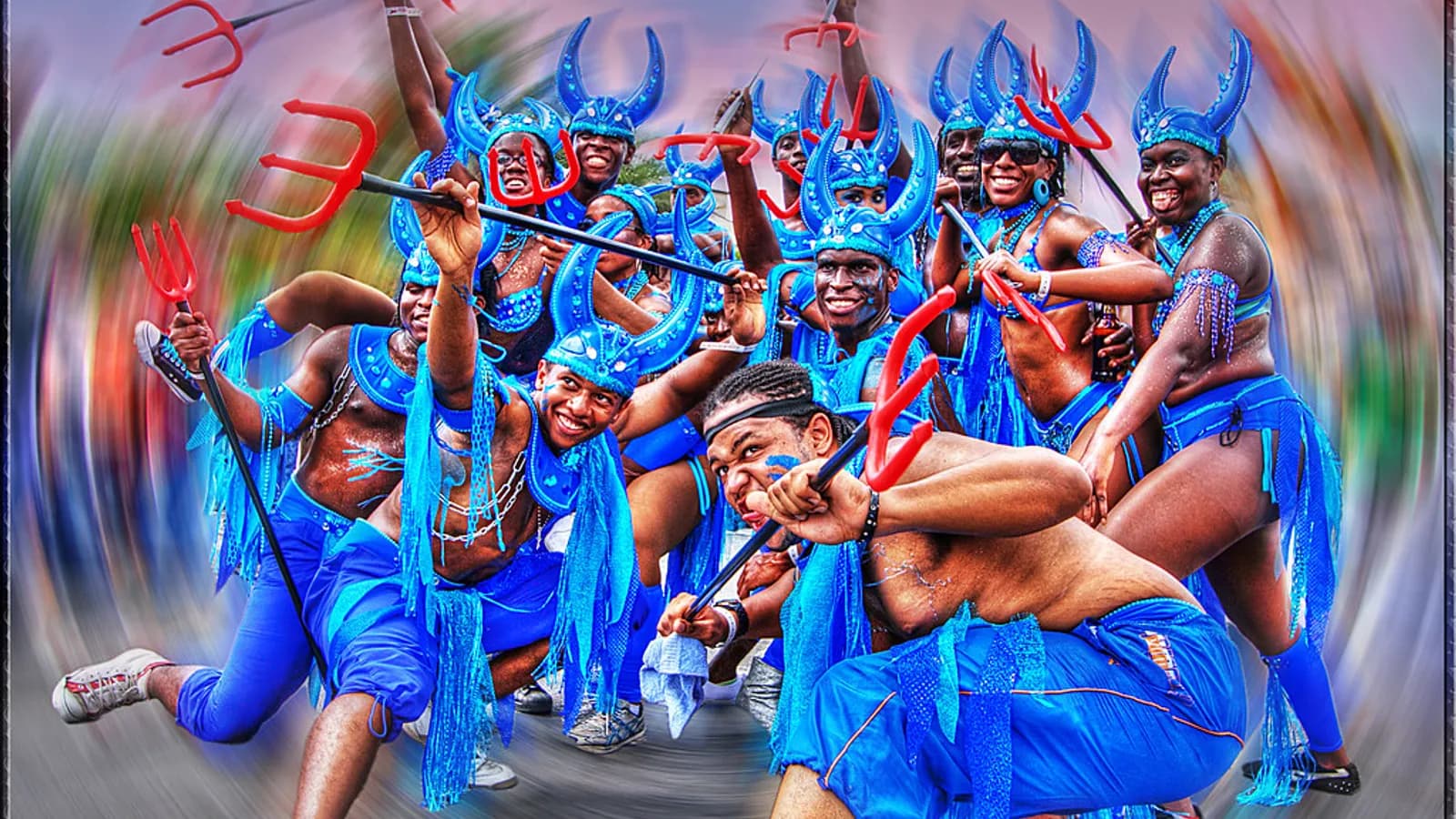
As dawn breaks on carnival, the streets fill with devils. The Jab Molassie is carnival's devil mas — one of its most primal and powerful traditional characters.
What is Jab Molassie?
The name comes from the French diable (devil) and molasses. Performers cover themselves in oil, mud, grease, paint, or molasses, playing mischievous, provocative devils. Some carry chains, pitchforks, or horns and move with menacing, playful energy.
A J'ouvert tradition
Jab Molassie is central to J'ouvert, the pre-dawn opening of carnival. In the half-light, covered head to toe, revellers become something wild and free — the opposite of the polished "pretty mas" that follows later in the day.
Meaning and history
The devil mas carries deep meaning. Molasses and sugar were at the centre of the plantation economy that enslaved Africans. By covering themselves in it and playing devils, performers reclaimed and confronted that history — transforming a symbol of bondage into one of defiance, power, and freedom. It is carnival's connection to Emancipation made visceral.
The many "jabs"
There are related devil characters across the Caribbean — the Jab Jab, the Blue Devils, and others — each with its own local style, but all sharing the raw, rebellious spirit.
Explore more
Discover the other carnival characters, learn about J'ouvert, and browse our guides and events.
Photo: Mark Morgan, CC BY 2.0, via Flickr (resized).
Frequently asked questions
What is Jab Molassie?+
Jab Molassie is carnival's devil mas, where performers cover themselves in oil, mud, grease, paint, or molasses to play mischievous, provocative devils. It is central to J'ouvert.
What does 'Jab Molassie' mean?+
The name comes from the French 'diable' (devil) and 'molasses' — referring to the substances performers cover themselves in.
What is the meaning behind the devil mas?+
Molasses and sugar were central to the plantation economy that enslaved Africans. Covering themselves in it to play devils let performers confront and reclaim that history, turning a symbol of bondage into one of defiance and freedom.
Experience it for yourself
S.O.C.A. keeps Caribbean carnival culture alive year-round through events, workshops, and our artist community.