







Moko Jumbie: The Stiltwalkers of Carnival
Towering above the crowd on stilts, the Moko Jumbie is one of carnival's oldest and most striking characters. Here's its story.
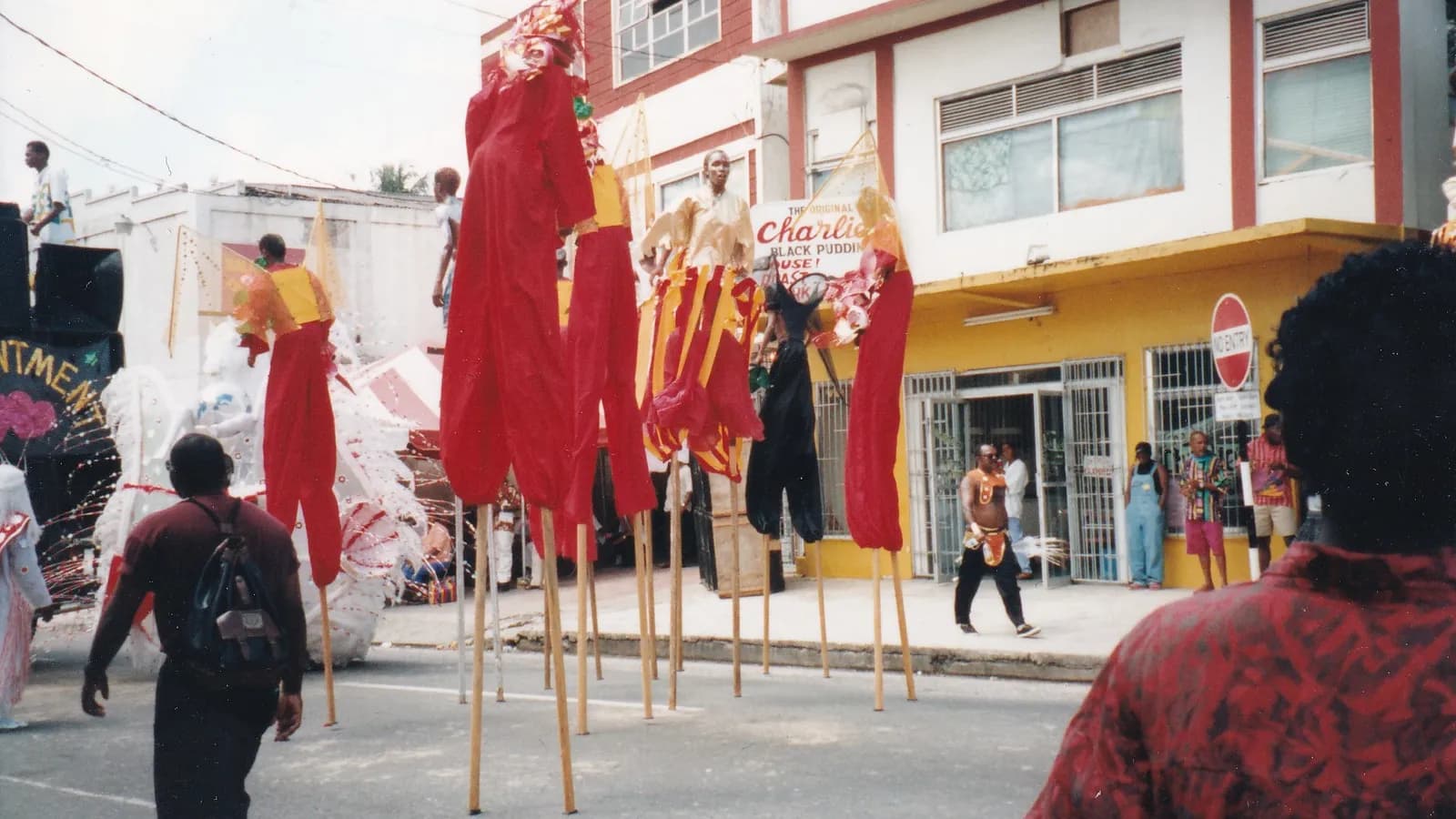
Among carnival's traditional characters, few command attention like the Moko Jumbie — the stiltwalker who towers above the crowd.
What is a Moko Jumbie?
A Moko Jumbie is a masquerader who performs on tall stilts, sometimes several metres high, dancing and swaying above the parade. The height is not just spectacle — it carries deep meaning.
Roots in West Africa
The character's origins trace to West Africa, where stilt-dancers held spiritual roles as protectors and figures who could see beyond the ordinary world. "Moko" is often linked to a West African deity or guardian, and "Jumbie" is a Caribbean word for a spirit. Enslaved Africans carried the tradition across the Atlantic, where it survived and transformed in the Caribbean.
The guardian who sees far
Because the Moko Jumbie stands so tall, it is said to see trouble coming from a distance and to watch over the community. It embodies protection, resilience, and the survival of African spiritual traditions through slavery and beyond — a living link to the roots explored in our Emancipation and carnival guide.
The skill behind the stilts
Walking, dancing, and performing on stilts takes remarkable balance, strength, and training. Modern Moko Jumbie artists keep the craft alive, teaching young people to literally step into the tradition.
Keeping tradition standing tall
Preserving characters like the Moko Jumbie is central to S.O.C.A.'s mission. Explore the other carnival characters, our guides, and our events.
Photo: Abreauna, CC BY 4.0, via Wikimedia Commons.
Frequently asked questions
What is a Moko Jumbie?+
A Moko Jumbie is a carnival stiltwalker — a masquerader who dances on tall stilts. The character is a guardian-spirit figure with roots in West African tradition.
What does the Moko Jumbie represent?+
It represents protection and vigilance — standing tall enough to see trouble coming and watch over the community — and the survival of African spiritual traditions in the Caribbean.
Where does the Moko Jumbie come from?+
Its origins trace to West Africa, where stilt-dancers held spiritual roles. Enslaved Africans carried the tradition to the Caribbean, where it endured and evolved.
Experience it for yourself
S.O.C.A. keeps Caribbean carnival culture alive year-round through events, workshops, and our artist community.